From sharpening a story hook to stepping behind the microphone, the ABC TOP 5 Science residency gave ARC-DECRA fellow, cognitive neuroscientist, psychology lecturer and early-career researcher Dr Matt Davidson an intensive lesson in making complex ideas matter to a national audience.
Inside the ABC: a TOP 5 residency experience

Each year, ABC Radio National puts out a call to Australia's higher education sector and research organisations to find the TOP 5 early career PhD scholars in three categories: Arts, Humanities, and Science.
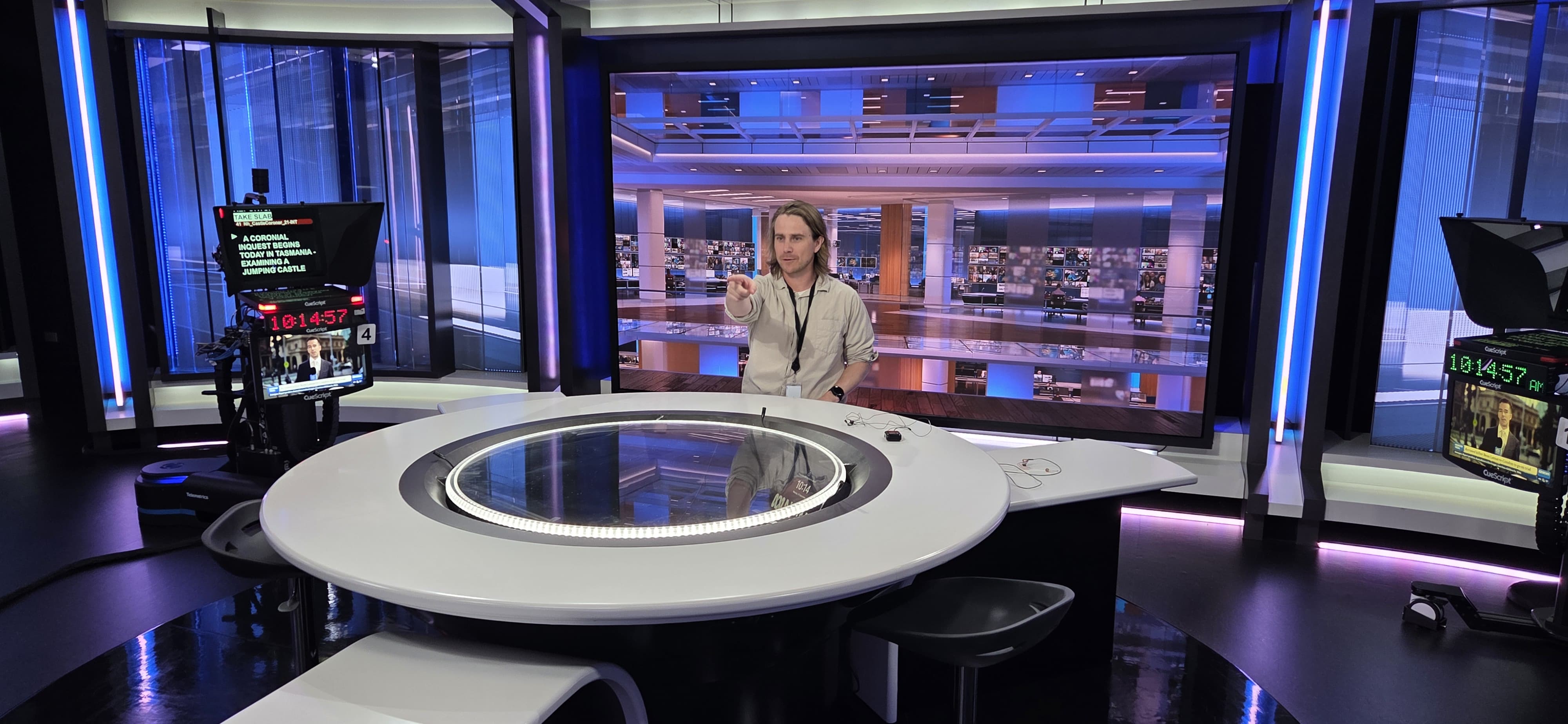
One of five science residents selected nationally for the program that trains researchers to communicate their work to the public, Matt was embedded at the national broadcaster for two weeks to prepare pitches for a range of platforms, practice interviews in radio studios, discover the nuances of vertical video and the machinery behind the ABC.
The experience gave him direct contact with the presenters, producers and editors behind the ABC’s radio, podcasts, digital news, television, video and social media. Although the target demographics, broadcast formats and aims of each platform could vary, a common theme emerged: why should your audience care?
“The TOP 5 residency was extremely collaborative, and is designed to spark enduring relationships between academic researchers and the ABC. The hope is for continuing partnerships, pitching stories, interviews and ideas after it has concluded,” Matt explained.
Among the activities were opportunities for residents to learn and practice voice and interview techniques, visit the teams behind different programs including All in the Mind and Late Night Live, and learn how stories change across platforms.
The TOP 5 residency was extremely collaborative, and is designed to spark enduring relationships between academic researchers and the ABC. The hope is for continuing partnerships, pitching stories, interviews and ideas after it has concluded.
“Sessions covered everything from the “pub test” for a pitch to ABC editorial standards and staying safe online,” Matt explained, adding residents were challenged to strip away jargon, reduce an idea to its essence and understand who they were speaking to.
“Different platforms reach different audiences. A good pitch shows that you understand not only the story, but where it belongs.”
In one exercise, Matt developed several one-line hooks for his research on consciousness, moving from high-level concepts of a “deep mystery” to attention-grabbing “what is your brain’s frame rate?”
“The ‘What is your brain’s frame rate?’ question was workshopped with producers of different platforms. It’s based on my research linking awareness to bodily rhythms, that is easy for me to imagine a presenter asking on air,” Matt explained.
The lesson learned was that questions beat statements.
“Keep refreshing your take and be willing to kill your darlings.”
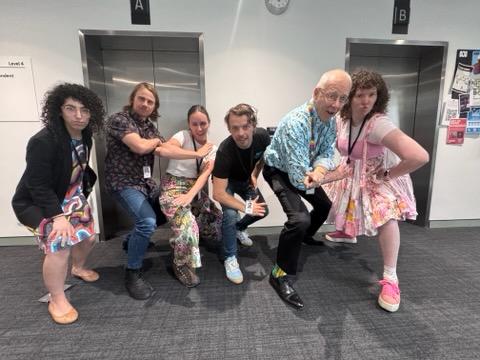
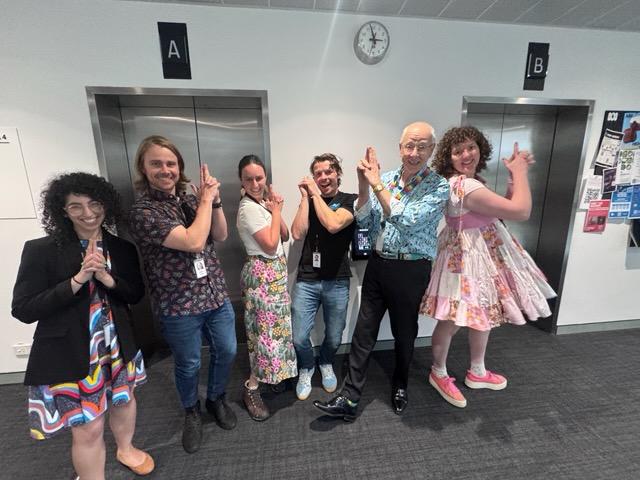
Matt’s residency overturned many assumptions about the media.
“I was surprised to learn that long-form explainers are thriving on YouTube, with much viewing happening on television screens.”
At the ABC, balance does not mean giving every view equal airtime.
“Balance means weighting coverage according to the evidence. And clarity is not the same as “dumbing down”. Nobody complains that a story was too easy to understand. Assume no knowledge, not no intelligence.”
Different platforms reach different audiences. A good pitch shows that you understand not only the story, but where it belongs.
Matt was able to put all these skills into practice when joining his science communication hero Dr Karl Kruszelnicki on his weekly calls to Australian primary school students. On a joint panel with the Top 5 residents they juggled questions which ranged from baby-black holes to personal sources of scientific inspiration.
“The kids asked incredible questions, which we really didn’t have all the answers for” Matt explained. “Fortunately the residency really gave me the confidence to speak as a general expert on a wide range of topics, and I can’t recommend it highly enough."
Thinking of applying?
For anyone wishing to apply for the next intake of the Top 5 program, Matt recommends you:
- Start with your motivation. The application asks why public communication matters to you, what you have already done and what you hope to learn. Be specific about the audience or change you want your research to reach.
- Pitch a story, not your entire research program. For the two-minute, self-filmed video, choose one idea a non-academic audience can quickly care about. Lead with the hook rather than your credentials.
- Make the “why now?” obvious. Connect the idea to a new paper, anniversary, mission, method or live public conversation.
- Pitch to a real program. Make your idea “a lifesaver in an ocean of content”. Know the show, its format and its audience and give a busy producer a sentence they could imagine reading on air.
- Prepare for a conversation. The interview is a 30-minute discussion with a judging panel. Bring three or four anecdotes to discuss, use metaphors, pause instead of padding and leave room for follow-up questions.
- Know your boundaries. If a question is outside your expertise, redirect it by saying: What I can tell you is this…”
In terms of developing your pitch, Matt recommends you:
- Find your core idea: write it in eight words, then four. If the meaning disappears, try again without adding jargon.
- Test the audience value: complete the sentence, “This matters to people because…”
- Choose the destination: identify one ABC program, section or platform that genuinely fits the story.
- Draft the on-air introduction: write one sentence a presenter could use to introduce you.
- Build a pitch page: include the hook, why now, why audiences will care, possible interviewees for context or balance, and the best format.
- Practise on camera: record a two-minute version face to camera, watch it back and refine the energy, pace and clarity.
A residency that continues after it ends
The ABC TOP 5 is for early-career PhD scholars with a passion for communicating their work to non-academic audiences. By supporting early career PhD academics to become the best communicators of their specialist research areas, Top 5 helps the researchers connect with broader, non-academic audiences.
“The value of Top 5 is not simply having two extraordinary weeks inside the ABC. It’s a way of seeing how your research can spark a conversation. You leave with practical skills, broadcaster contacts and an invitation to keep contributing,” said Matt.
What’s next?
- Learn about Matt’s research in the in the Discipline of Psychology at the School of Clinical and Health Sciences.
- Discover the Top 5 Media Residency Program.