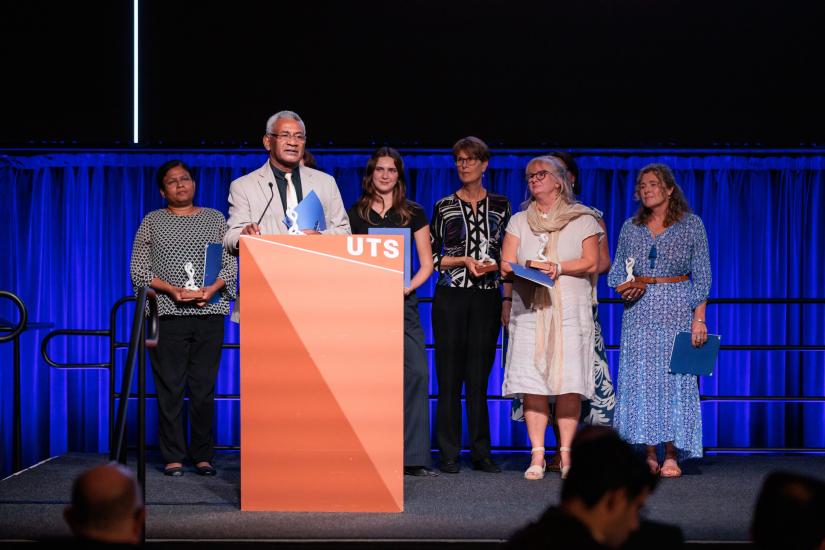
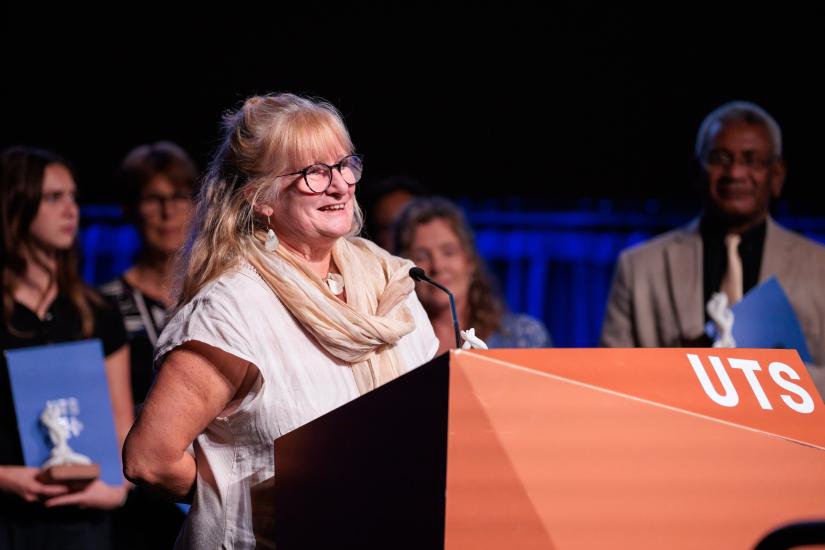
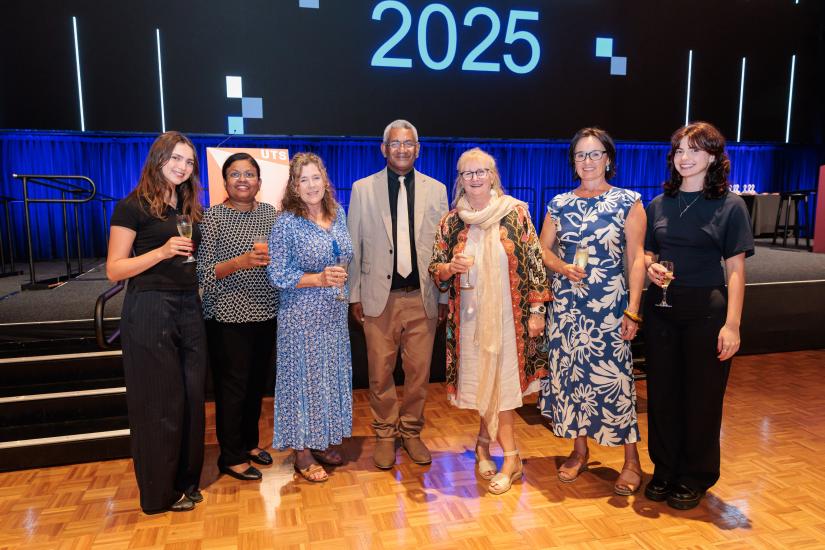
Research impact doesn’t happen overnight. It’s built through trust, shared leadership and decades of working alongside communities. A long-term commitment has been recognised with the World Health Organisation (WHO) Collaborating Centre on Nursing Midwifery and Health Development at UTS receiving the Research Excellence through Partnership Award in the 2025 UTS Vice Chancellor’s Award for Research Excellence.
Research partnership honoured for transforming Pacific health

By forging an enduring and impactful international research partnership through working with partners in 37 countries, including 22 Pacific Island nations, the Centre’s values‑driven approach has helped strengthen health workforces, shape policy, and improve health outcomes where they matter most.
The globally recognised centre of excellence has a strong track record of policy relevant, implementation focussed research and capacity building to improve health equity across the Pacific. In collaboration with its long-standing partners, the South Pacific Chief Nursing and Midwifery Officers Alliance, the Centre has jointly transformed health workforce development across the Pacific region.
Director Prof Michele Rumsey said that the Centre’s work spans education, training, policy and monitoring, evaluation, research and learning with experts from Australia and from Pacific nations including nurses, midwives, and health and policy researchers.
“We take a whole-system approach to ensure that nurses and midwives across the region possess adequate education, skills, and training. Our work not only aims to upscale, but also to ensure these sectors are supported by strong regulation and policy to enhance health development,” she said.
A partnership grounded in trust and time
Established in 2004, meeting regularly over more than two decades and working in collaboration with governments, communities and regional institutions, the Centre supports the health workforce in the context of intersecting challenges such as climate change, food and water security and maternal and child health.
“Establishing impactful partnerships takes time: in our case, several decades,” said Professor Di Brown.
Focus areas include:
- Leadership: Researching how current national and regional leadership bodies are addressing the needs of nurses and midwives on all levels. With this evidence, the Centre strives to build leadership capacities and capabilities in-country by co-designing educational materials, curriculums, and evidence-based training across all levels of the health ecosystem.
- Jobs: Collaborating regionally to research the dynamics of the nursing and midwifery workforce to better understand both colleagues’ unique needs and the perceived value of nursing at a local level.
- Education: Assessing emerging needs and gaps in nursing and midwifery skills in the region to build the capacity of in-country educators and the resources they use, to enable them to carry out high quality nursing and midwifery education.
- Service delivery and regulation: Working with governments to evaluate, develop, and strengthen regional accreditation systems, ensuring they reflect the needs of individual countries and protect patient safety.
- Maternal and Child Health: Using a whole-system approach to address maternal and child health challenges in each country context, aiming to improve maternal and child health throughout the region.
The Centre currently manages more $12 million in active projects funded by national and international agencies including the World Bank, the Department of Foreign Affairs and Trade and the National Health and Medical Research Centre, providing both the scale and operational capability to support complex multi-country projects.
Putting partners first
Demonstrating the power of long‑term, values‑driven collaboration to deliver systemic change and grounded in mutual respect, cultural safety and shared leadership, the Centre has delivered more than 50 joint projects influencing education, regulation, leadership and health policy, each aimed at equipping health professionals to improve health outcomes in their communities.
“For research to have genuine impact, it must engage individuals in the communities affected to ensure that we not only find the right answers, but also that we ask the right questions in the first place,” said Chris Rossiter, one of the Centre’s researchers.
A defining contribution of the team’s work is the development of culturally responsive research methodologies that prioritise Pacific ways of knowing and address power imbalances in global research.
“As a Centre, we are often seen as a bridge between our industry and funding partners. Putting your partners first and prioritising local needs often means delaying traditional research outputs such as peer-reviewed publications,” said Prof Jacqui Webster, the Centre’s Deputy Director.
For research to have genuine impact, it must engage individuals in the communities affected to ensure that we not only find the right answers, but also that we ask the right questions in the first place.
Each project is underpinned by a Principles of Partnership approach that prioritises respect, reciprocity, local leadership, shared decision making and long-term capacity strengthening. This collaborative approach has strengthened regional research capability while also reshaping how UTS engages in ethical, inclusive international partnerships.
The value of being recognised through an Award
Senior Project Officer Amanda Neill said that nominating the team for a Vice Chancellor’s Award provided an opportunity to stop and take stock of what has been achieved regardless of whether it would win or not.
“Winning this Award has enabled us to reflect on what has been achieved over so many years, especially those days when progress seems slow,” she added.
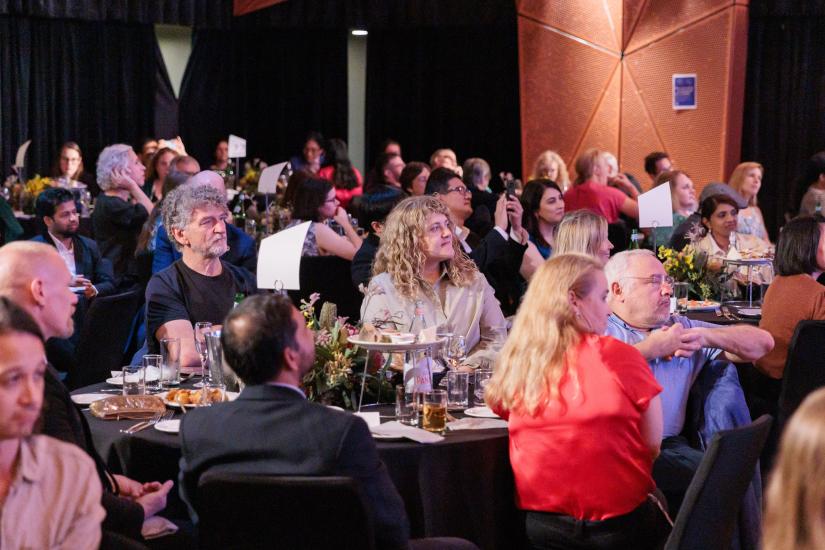
“It is very rewarding to reflect on our efforts, compiling the application with colleagues and feeling part of the larger UTS research community,” said Pacific Island partner Michael Larui, adding that winning the important recognition by UTS of the impact of the collaborative research efforts over time helps both the research team and international partners to feel valued.
“Collaboration with partners in Pacific Island Countries has been truly rewarding and has enriched our understanding and practices as researchers,” added Michele.
It is very rewarding to reflect on our efforts, compiling the application with colleagues and feeling part of the larger UTS research community.
Congratulations to the UTS Faculty of Health team and its global partners whose work represents research excellence that is connected, equitable and purpose‑led, informing global WHO policy frameworks, attracting significant international investment and amplifying Pacific voices while building research capacity within partner countries: Professor Michele Rumsey, Professor Di Brown, Professor Jacqui Webster, Professor James Buchan, Associate Professor Margaret Gatling, Dr. Michael Larui, Amanda Neill, Tasmin Goldsmith, Kerri Gianesi, Chris Rossiter and Soudabeh Niroomand.
The enduring partnerships they lead stand as a benchmark for how UTS contributes meaningfully to global challenges through respectful, long‑term collaboration.