As we approach the end of the year, now is a great time to celebrate your research achievements as well as those across the UTS research community.
Ten ways to set up for research success in 2026

The summer break offers an excellent opportunity to reflect on what you’ve accomplished in your research journey, make sure you are documenting your progress and start to plan for the year ahead.
1. Update your Discovery Profile
Update your UTS Discovery Profile by adding details of any papers, projects or collaborations you may have embarked on this year. If someone needed your help, would they be able to find you? Add ROCF-aligned keywords to your profile via Symplectic to become more discoverable and connect with potential collaborators.
- Learn more about the Research Outcome Capability Framework keywords and how to use them to maximise your discoverability.
- Login to Symplectic to update your keywords.
2. Connect with a UTS network
Do you belong to any of the UTS research networks? Connect and collaborate with others by joining one of them:
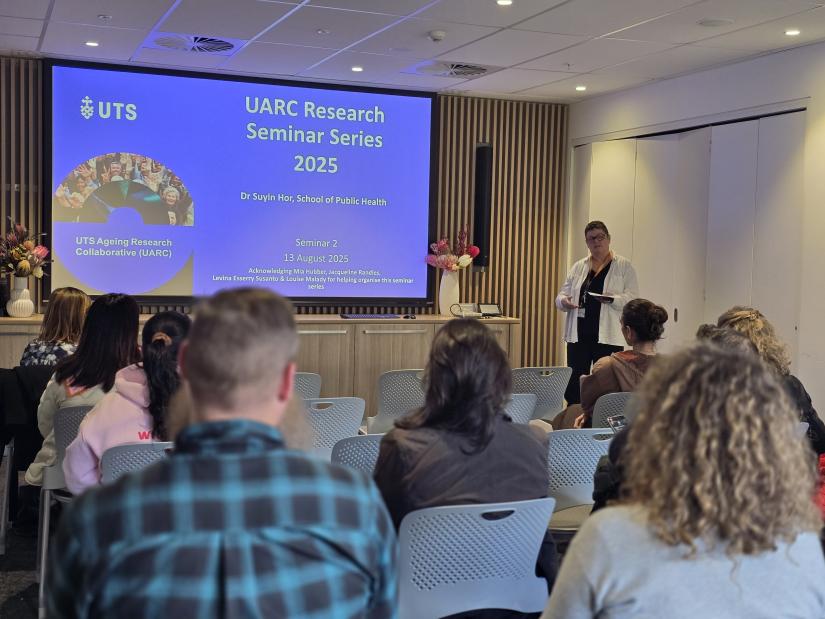
- UTS Ageing Research Collaborative (UARC)
- Trustworthy Digital Society (TDS)
- UTS Participatory Action Research Collaborative (PAR Collaborative)
- INSIGHT Research Institute for Innovative Solutions for Wellbeing and Health
- UTS Domestic Violence and Family Violence Network
- International Development Research Network
- Stroke Research Collaborative
- Disability Research Network


3. Contribute to the deep Sector Engagement strategy
The UTS deep Sector Engagement approach is developing a whole-of-university engagement model, moving beyond individual faculty strategies to cohesive, institutional-level, connected research strategies that align UTS's world-class research capabilities with end users.
UTS is building deep Sector Engagement strategies in the areas of
Consider getting involved by connecting with group leads.
Learn more about UTS’s approach to deep Sector Engagement.


4. Review your plan for research impact
Are you strategically planning for research impact? Do you need to review your research plan? Take stock of how you are charting your research impact, how you can better plan for it and the various ways you can demonstrate it.
Visit our Research Impact series to discover how to:
- Plan for impact
- Write for impact
- Be discovered
- Put it into practice
- Build an external presence
- Increase your visibility
- Evidence impact
- Evaluate and monitor feedback.
5. Connect using Icebreaker
Have you tried using the UTS Icebreaker app? Icebreaker is the UTS happenstance Microsoft Teams app that matches you to another research colleague every month. You can choose to meet up to grab a coffee or have a chat. Sign up for monthly connections throughout 2026 to get to know your research peers.
Learn more about Icebreaker and how to join.
6. Be mindful of how you use AI in research
With AI constantly changing, UTS encourages staff to stay up to date. Familiarise yourself with UTS guidelines around the responsible use of AI in research.
Visit our Use of AI in Research pages to learn more about:
- Policy, procedures and guidelines for AI in Research
- Selecting AI Tools for Research
- AI Communities and Support
7. Find funding for your research project
How familiar are you with the Australian and international funding landscape? Are you aware of any internal UTS grants or fellowship opportunities that you may be eligible for?
As you plan for 2026, factor in any internal UTS guidelines you need to be aware of.
You can find relevant funding opportunities through Pivot-RP, a searchable database of research funding opportunities now available to UTS researchers. The platform offers targeted searches that connect you to relevant research funding opportunities based on your research profile.


8. Repurpose unsuccessful funding applications
Are there any grant applications you worked on this year that could be repurposed for upcoming opportunities? If you find funding schemes whose criteria align with work you may have prepared for something else, consider whether it’s worth rewriting your application to give yourself another chance.
- Find opportunities in Pivot RP.
- Connect with the Research Office grants team for guidance.
9. Promote your research through storytelling
Research communication and crafting a compelling story about the difference your research will make in the world can be a game changer in securing support for your research and building impactful collaborations.
- Participate in the research communication self-paced training module.
- Consider using podcasting as a way to amplify your audience engagement.
- Send us a story about how you are achieving impact for sharing in the RES Hub blog by emailing us at REShub@uts.edu.au.
- Consider writing for The Conversation to share your expertise, influence public debate and raise your research profile. Pitch an article idea.

10. Explore research training opportunities
UTS delivers regular research development events and activities to boost the calibre of its research and upskill staff. Our training is aligned with the Research Outcomes Capability Framework (ROCF) that sets out ten capabilities needed for research excellence. How are you tracking against the ROCF and where could you plan to develop your skills and knowledge?
Catch up on past training sessions that you may have missed online and try to commit to participating in training throughout 2026 to lift your capability and skills.
- Explore self-paced training opportunities and catch up on past ASPIRE sessions.
- Follow UTS ASPIRE on Humanitix to know what’s coming up.
- Regularly visit the RES Hub What’s On page to keep informed about opportunities as they arise and upcoming events and workshops.
- Attend a drop-in session.
- Follow RES Hub on LinkedIn to stay in the loop.