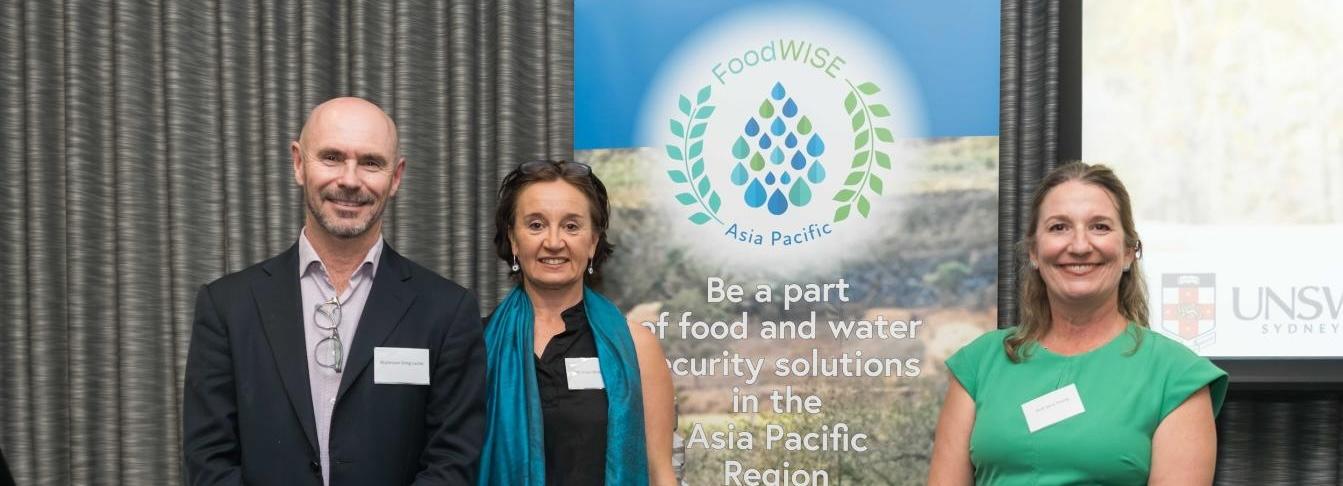
When you work internationally, research partnerships that bring together diverse fields of expertise to tackle complex problems from multiple angles can strengthen your funding applications. In some cases, it is mandatory to have a local partner, such as when applying for funds from the European Union.
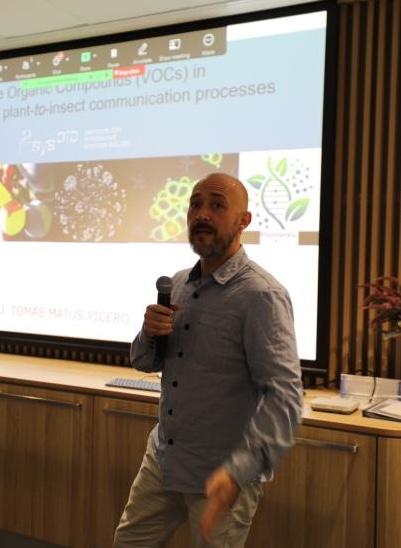
Biology meets acoustics and vibration
The Good Vibes project is a collaboration between the Biogenic Dynamics Group in the UTS Centre for Audio, Acoustics and Vibration (CAAV) in the Faculty of Engineering and IT, researchers from Life Sciences and Systems Biology at Turin University and the TOMSBio lab in the Institute of Integrative Systems Biology (I2SysBio), Valencia.
With funding from the prestigious Human Frontier Science Program, the multidisciplinary team is seeking to better understand how finely tuned plant-insect communication is crucial for maintaining plant-pollinator interactions.
Investigating how plants respond to pollinator vibration and other acoustic signals, the team comprises researchers from experimental biology, biochemistry, computational biology and data science. The project features novel research contributions from a UTS team led by A/Prof Sebastian Oberst in the Biogenic Dynamics Group that brings expertise in bioacoustics, complex dynamics, machine learning and biogenic materials.
“Our research aims to decode the ‘language’ of plant-insect communication through vibroacoustic signals,” explained Sebastian. “We use custom-built microelectronic monitoring devices and in-house algorithms to study how vibrational waves travel through plant structures and natural materials, to develop bio-informed vibroacoustic metamaterials.”
Checklist for building interdisciplinary, international collaborations
- Connect with colleagues that bring diverse expertise and skills, ensuring a balance of disciplines and perspectives.
- Build relationships by first working on small projects to discover whether you and potential collaborators are a good fit.
- Define shared goals, objectives and outcomes, ensuring alignment of interests among collaborators.
- Set up regular meetings for effective communication and aim to get together in person.
- Clearly outline each member's role and contribution, ensuring everyone understands their responsibilities.
- Foster a culture of openness and mutual respect.
- Encourage constructive feedback.
- Establish short-term and long-term goals.
- Regularly assess the collaboration's effectiveness and make improvements based on feedback.
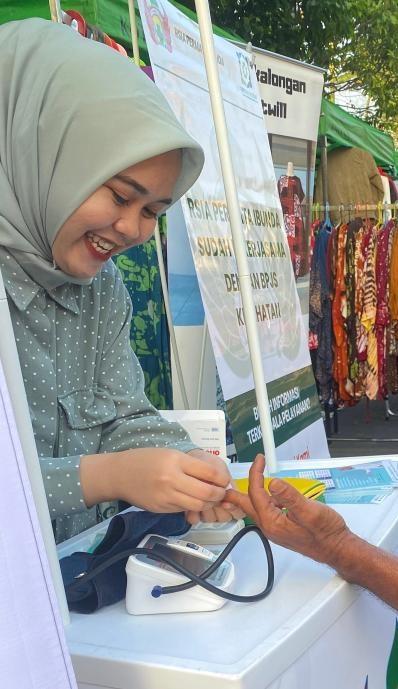
Develop relationships to build a team
A Senior Lecturer in Strategic Supply Chain Management in the UTS Business School, Dr Moira Scerri takes an interdisciplinary approach to service science, emerging technologies and participatory design to improve service delivery in health and ageing.
When working on a customer journey map for the trajectory of diabetes, Moira came across the Invested: Australia’s Southeast Asia Economic Strategy to 2040 report. The report identifies priority countries in Southeast Asia with which Australia should develop international relations, along with key industries, including health.
After chatting with colleagues from other universities, Moira decided to focus on developing a project based in Indonesia where the prevalence of diabetes is higher than other countries.
Working with a small group of Australian academics, she assembled a team that was able to engage a recent PhD graduate from ANU who was completing her PhD in obesity and diabetes in Indonesia. The team also partnered with the Chronic Disease Research Centre from the University of Muhammadiyah Surakarta in Central Java. The group then worked together to develop a research proposal to create a diabetes customer journey map for Indonesia.
While unsuccessful in achieving funds from this first grant application, the international research collaboration led to many positive outcomes including an academic appointment and a customer journey map serving as an artifact to communicate the need and potential areas of focus for other researchers, including PhD students.
“We now have PhD students looking at the use of conversational agents for diabetes self-management and another student exploring the post adoption strategies for the use of wearable devices for managing chronic health conditions,” Moira said, adding that one of the team members has also been successful in securing a small early career research grant.
“In this respect, our project demonstrated the power of slicing and dicing a large research agenda so that so people can see where they and their work fits in and how their contribution adds to the bigger picture.”
What's next?
- Leverage your networks both in Australia and abroad.
- Attend international, multi-disciplinary conferences to meet peers outside your field.
- Attend networking events hosted by international embassies and trade associations.
- Attend meetings outside your research field that address issues where your knowledge may be relevant.
- Engage with academic international visitor and exchange programs to forge new connections and explore opportunities.
- Proactively initiate collaborations through pilot projects or feasibility studies.
- Reach out to International Research Grants Manager Maggie Wang via email to discover upcoming opportunities.
- Visit the UTS Partnerships and Agreements SharePoint.
Go to the Building an International Research Strategy landing page