
International research projects increasingly recognise that meaningful community engagement is essential for generating impactful, relevant and sustainable outcomes.
Whereas traditional models of research might have examined communities, collaborative, reciprocal partnerships value community expertise.
By collaborating with international not-for-profits and local government and community representatives, your research can make a meaningful difference to communities while also offering two-way learning and opportunities for further partnerships.
Co-design right from the start
When you involve community members in your international projects, do so right from the start so you can foster shared ownership of both research processes and outcomes.
With co-designed research, involve community partners from the earliest stages as you start to design research questions. Invite their contributions into methods and desired outcomes.
Be sensitive to diverse cultural and social contexts by actively listen to community voices, acknowledging local knowledge and adapt approaches to be inclusive and respectful.
This approach will:
- establish strong foundations for your collaboration
- ensure that proposed research projects are responsive to community needs and priorities
- identify how benefits can be shared.

Ensuring good governance
Social scientists Dr Nick McClean and Dr Dedi Adhuri specialise in participatory approaches to research-in-development. They have collaborated to develop deliberative methods that link-local level research on ecosystems and communities with the design of higher-level decision-making and policy frameworks.
Nick and Dedi are currently working in partnership with research institutions and government agencies in Indonesia and the Philippines to address governance issues for marine sectors. With experience working internationally with stakeholders with diverse needs and interests, their recommendations for researchers seeking to address complex multi-scale sustainable development and natural resource management challenges include making affected communities part of the solution, developing a clear set of governance principles to provide strategic guidance to collaborative efforts and fostering policy and practice-oriented partnerships early in the project.
Read more about their tips for good governance when working internationally
Include opportunities for knowledge exchange
Use the opportunity of an international research collaboration to provide skills development and support community-led initiatives that extend beyond the life of your research project. Find ways to enhance impact through training, resource sharing or community engagement.
Ensure robust evaluation using frameworks to demonstrate how projects are accountable to the communities involved and that outcomes are measured not just in academic terms, but in terms of their longer-term social impact.
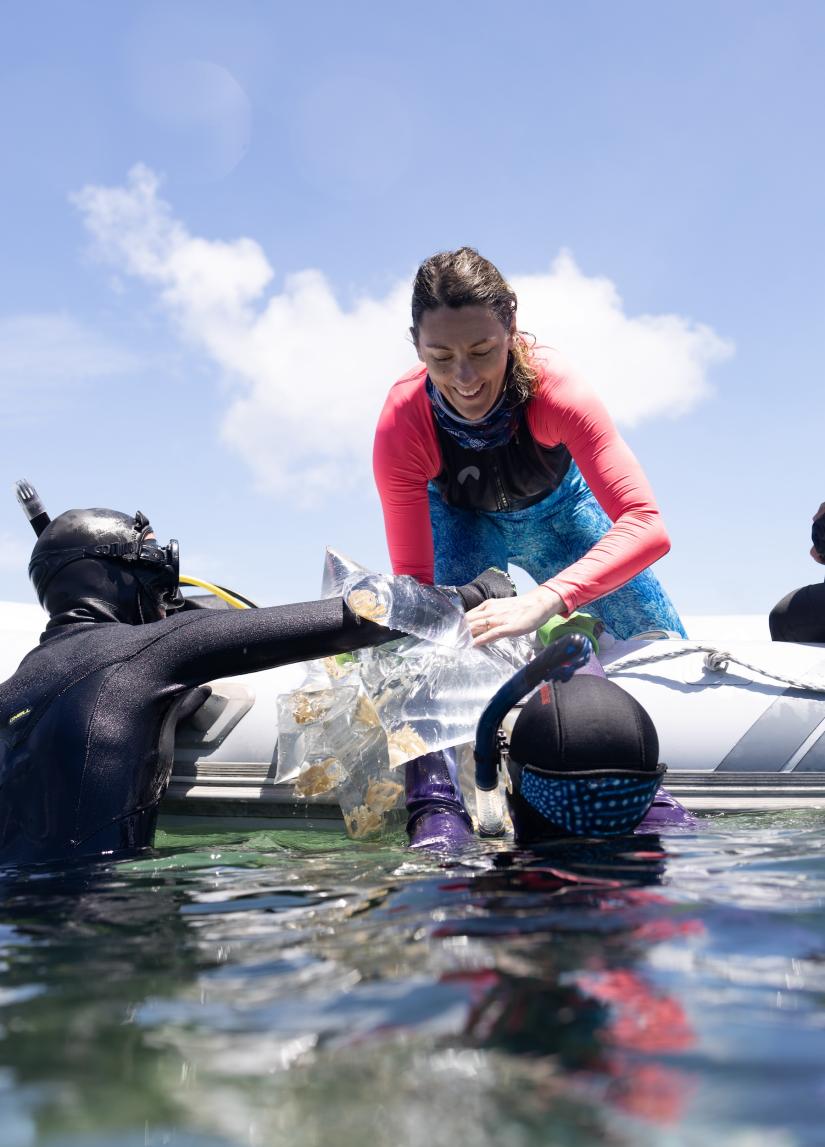
Invite affected communities to be part of the solution
Professor Emma Camp's work features interdisciplinary approaches combining physiology, ecology and biogeochemistry to address coral reef resilience. Her team’s research involves speaking with communities that rely on reefs to understand how they can be part of the restoration process.
Emma has been able to break an ambitious agenda into smaller research components to build strong local relationships and secure funding for future projects.
Top tips for involving local communities
When working internationally with local communities, think about how you can:
- Engage communities from the outset, not just as subjects but as co-researchers.
- Listen and adapt by using research methods that value community voices and expertise.
- Share benefits by ensuring outcomes are meaningful for both academic and community partners.
- Evaluate together in ways that reflects community priorities and impact.
- Build capacity and skills.
- Identify further opportunities for collaboration.
By following these principles, your international research project can achieve deeper impact, foster trust, open doors for future projects and create lasting change.
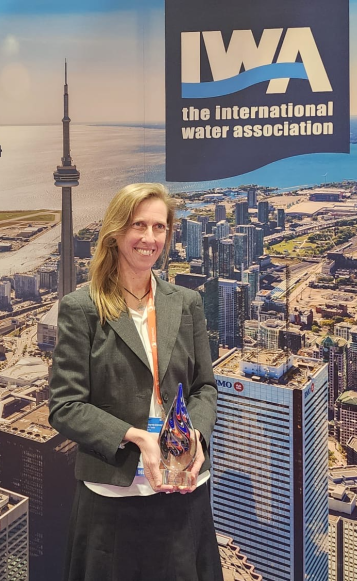
Enterprise in WASH (water, sanitation and hygiene)
Associate Professor Juliet Willetts, Research Director at UTS’s Institute for Sustainable Futures, is leading the Enterprise in WASH, a research initiative to advise national policymakers and practitioners. Focusing on Vietnam, Indonesia and Timor-Leste, Willetts and her four team members have assessed the motivations and barriers of entry for micro, small and medium enterprises to establish WASH businesses.
“In each country, we also looked through the lens of how civil society organisations (CSOs) can support these entrepreneurs better and determine if entrepreneurial values are at odds with the traditional approach to water and sanitation,” said Juliet.
“We are also analysing the role of social enterprise in WASH - if and how you can be enterprising but do social good at the same time,” she says.
“Developing personal relationships is a big part of things. It’s about finding likeminded people with a common goal and together you can achieve something,” said Prof Juliet Willetts. “It’s about developing that long term relationship rather than a one-off exchange and understanding their personal drive to achieve change.”
Learn more about how Juliet and her team are enabling access to clean water and sanitation
What’s next?
- Access the International Grants Toolkit for information, resources and good practice examples related to all aspects of international grants management, including grant writing, proposal development, funding landscape, submission requirements and UTS internal policies and processes.
- Visit the UTS Partnerships and Agreements SharePoint.
Go to the Building an International Research Strategy landing page