
The International Grants team in the Research Office work with the UTS Aspire program and expert guest presenters to offer regular training courses related to various international funding schemes.
We encourage you to attend these research development workshops to gain practical tips and discover useful information that will help enhance your international research collaborations and increase your chances of funding success.
Information about upcoming events and workshops can be accessed on the Whats' On pages of the RES Hub website.
You can also catch up with session recordings online.

Case Study: Navigating the US funding landscape
In a workshop on accessing funding from the United States (U.S.), Dr Tisha Dejmanee discussed her experience of applying for funds from the Embassy of the United States through its annual public affairs grant program. She recommends preparing thoroughly by gathering sufficient preliminary data, strictly following any guidelines to help structure your proposal and seeking external reviewers' comments well before the submission deadline.
In the same workshop, A/Prof Yuen Yee Cheng, a teaching and research academic with expertise in molecular and cellular biology, described how she secured funding for a biomedical research project with the Congressionally Directed Medical Research Programs.
While there may have been more research funding available in the United States compared to Australia in the past, Yuen said it’s important to keep up to date with changes to funding trends, including those influenced by government policy. Her advice is to talk to the International Grants team in the Research Office to ensure that you are applying to the right fund.
A recipient of various U.S. funding grants for quantum technology research since 2015, Prof Igor Aharonovich recommends directly approaching grant managers. Igor says attending international conferences and pitching the benefits of your research to as many decision makers as you can is well worth the effort. In his experience, telling U.S. funding managers directly about your research and why it is worthy of funding pays off.
Tom Kuhn, one of Hanover Research’s Senior Grants Consultants, said you can enhance your chances of success by understanding the U.S. funding ecosystem, strategically building collaborations and mapping your research to agency priorities.
Learning from peers
In previous international funding sessions, academics from across the university have shared informative examples of how they have worked internationally.
Their tips for grants success include:
- Read the guidelines carefully. They contain specific requirements and focus areas that need to be addressed as part of your proposal
- Collaborate with partners who have expertise in the area you are applying for. This can strengthen your application and increase your chances of success.
- Even if guidelines do not request it, preliminary data can be beneficial to demonstrate the feasibility of your project.
- Make sure your proposal is tailored to meet the specific grant requirements. Use the language and focus areas mentioned in the guidelines to align your proposal with the funder's objectives.
- Ask colleagues within and outside your field to review your application. This can help identify gaps and improve its overall quality.
- Use your existing networks and collaborations to find new funding opportunities.
- If your application is unsuccessful, use the feedback to improve your next submission. Persistence and continuous improvement are key to securing funding. It’s a long-term game.
- Participate in conferences, workshops and professional networks to build relationships and stay informed about new funding opportunities.
Case Study: Leverage your relationships
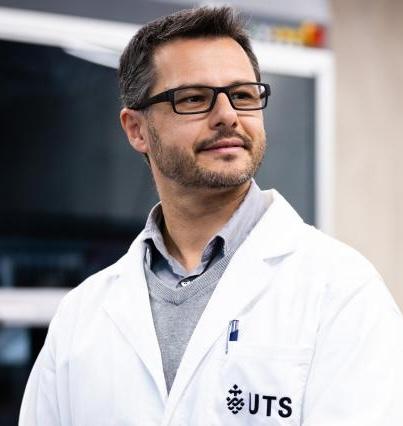
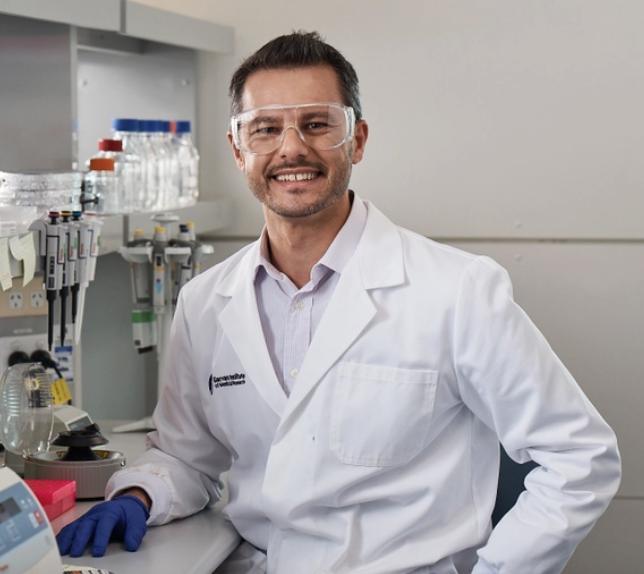
Dr David Gallego Ortega from the UTS School of Biomedical Engineering works in cancer research. He is increasingly interested in European funding.
“Our team is currently developing a lot of collaborations in Europe and I think that we can leverage those funds to see what is possible,” he said.
Professor Keren Winterford, the Program Lead-International Development at the UTS Institute for Sustainable Futures has used educational exchanges as a pathway to securing funding for international development research.
“At ISF, we're very industry focused and have had a lot of success with funding from the Department of Foreign Affairs and Trade. Our focus, in collaboration with lower- or middle-income countries, is social justice, reducing poverty, ensuring equal rights and opportunities for all,” she explained.
Keren and her ISF colleagues have worked with the DFAT High Commission in Indonesia to develop some research workshops as a first stage in building international collaboration.
The exchange comprised of a series of learning activities in Australia and Indonesia, and this allowed the ISF team to develop relationships with potential collaborators for future grants.
“Our colleagues did some training in Jakarta and then the Indonesian cohort came out to Australia. The program included teaching and site visits. This exchange was an opportunity to use learning experiences as a way to establish international relationships with collaborators in other fields,” Keren said.
There's been continued conversations since, with the aim of taking this collaboration further and potentially developing a joint research proposal.
“It’s about seeing how you can leverage one thing into other spaces and use a research activity or a particular grant for multiple purposes,” Keren said.
Case Study: Ask for feedback and consider finding a mentor
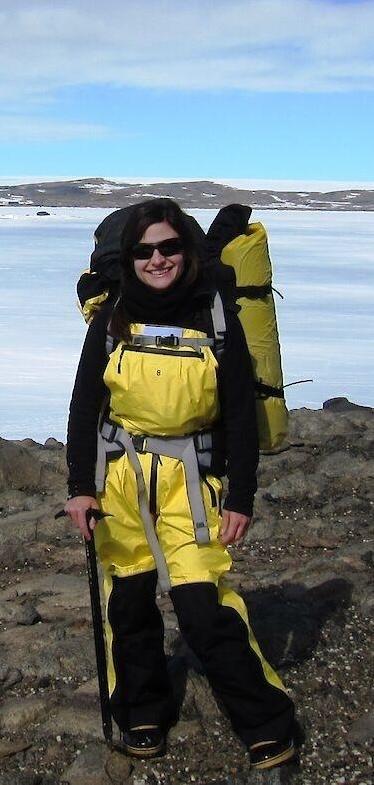
When applying for funds from the Human Frontier Science Program that supports novel and interdisciplinary approaches that involve scientific exchanges across national and disciplinary boundaries, A/Prof Katherina Petrou from the School of Life Sciences said that having a mentor really helped push the team forward.
“We also had colleagues read our application including those that had won Human Frontier grants before, as well as other people within the context of environmental science and marine biology,” she explained.
“They were able to provide some really nice feedback which we tried to incorporate, as they identified the holes in our logic and in our structure.”
While the process of applying for Human Frontier Science grant can be lengthy, Katherina believes that it is worth applying if you have original ideas and an international network.
“If you've got a really cool idea and a cool collaborator or two and you want to try something hard, I think it's very much worth the effort to prepare an application,” she said. “It's actually quite exciting. You create a community.”
Katherina especially enjoyed collaborating with international peers.
“You get to join this community and exchange ideas. And it is really your idea. It's not trying to repeat what someone else has done. It's about coming up with a new approach and trying to combine skills and expertise to answer a problem that has previously been intractable.”
What’s next?
- Watch a recording of the workshop: International Grants Insights and Preparation.
- Browse training opportunities on the RES Hub What's On pages
- Contact the International Research Grants Team in the UTS Research Office for help with funding analysis, eligibility review, budget development and compliance.
- Visit the UTS Partnerships and Agreements SharePoint.
Go to the Building an International Research Strategy landing page