How can smart sensing and digital innovation improve the sustainability and equity of healthcare delivery? All welcome to join the NSW Smart Sensing Network Women in Sensing Forum at UTS Startups on Tuesday 12 May to hear from a globally recognised AI leader in human-centred data science, a pioneering biomedical engineer advancing regenerative therapies and an expert in wearable and IoT sensing systems.
Attend the Women in Sensing Forum

Caption
UTS Pro Vice-Chancellor (Research) Prof Anika Gauja
The Women in Sensing Forum: Human Health and Sustainability will bring together leading women transforming sensing science into real-world impact.
Exploring how the health sector is embracing digital technologies to improve the sustainability of healthcare delivery in Australia, within a complex, resource-intensive system where patient outcomes are paramount, the panel discussion moderated by UTS Pro Vice-Chancellor (Research) Prof Anika Gauja will consider the role of sensing technologies in enabling more efficient, effective, and equitable models of care.
A key focus will be improving access for rural, remote, and very remote communities, where distance and resources significantly impact outcomes.
“I’m looking forward to welcoming guests to UTS to hear from three of our brilliant researchers, Distinguished Professor Fang Chen, Dr Jiao Jiao Li and Professor Sally Inglis who will explore how sensing and digital health innovation can deliver meaningful improvements in health outcomes, particularly for those most in need.” Anika said.
Equitable access is central to healthcare sustainability, as is supporting quality-of-life measures that enable people to remain healthy and supported in their own homes, including ageing populations and other vulnerable groups.
The panel discussion will highlight how digital health, remote monitoring, and virtual care can help bridge gaps for disadvantaged communities, while also expanding health education and knowledge-sharing to support more inclusive models of care.
By bringing together researchers, clinicians and industry leaders, we are accelerating the translation of sensing and digital health technologies into real‑world healthcare settings.
Dr Kathleen Peters, Strategic Advisor for health research in the UTS Business Research Engagement team and NSW Smart Sensing Network (NSSN)'s Engagement Lead said that the Women in Sensing Forum demonstrates the strength of collaboration between the Network, industry partners and UTS as a leading innovation university.
"By bringing together researchers, clinicians and industry leaders, we are accelerating the translation of sensing and digital health technologies into real‑world healthcare settings,” she said.
"These cross‑sector partnerships are vital to building more sustainable and equitable models of care, particularly for rural and underserved communities, and this event highlights the leadership of women driving meaningful impact through advanced sensing science.”
Speakers
- Distinguished Professor Fang Chen, Executive Director, Data Science Institute, UTS
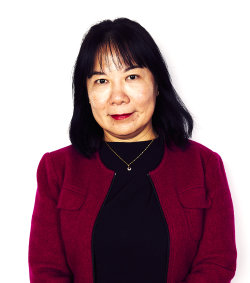
A globally recognised and award-winning leader in artificial intelligence and data science, Fang drives transformative research and innovation at the intersection of academia, government, and industry. Her research expertise spans artificial intelligence, machine learning, human–machine interaction, behaviour analytics, and responsible, human-centred AI.
Having held senior leadership roles at Intel, Motorola, and CSIRO, as well as serving as Dean of Faculty at Beijing Jiaotong University, Fang is a recipient of many prestigious science and engineering awards, including the Australian Museum Eureka Prize for Excellence in Data Science, the NSW Premier’s Prize for Science and Engineering, and the Australian Financial Review AI Award.
- Dr Jiao Jiao Li, Biomedical Engineer and Senior Lecturer, UTS
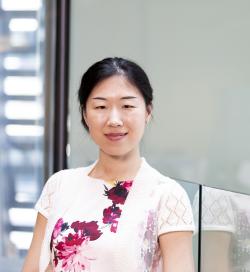
Jiao Jiao is a biomedical engineer and Senior Lecturer at UTS, specialising in tissue engineering and regenerative medicine for musculoskeletal diseases. She leads a research team developing innovative stem cell-based therapies and bioactive materials, including nanoscale bio-therapeutics designed to treat conditions such as osteoarthritis.
Committed to advancing next-generation approaches to repairing and regenerating damaged tissues to improve patient outcomes, Jiao Jiao has been recognised for her impact with prestigious awards, including the 2024 Eureka Prize for Emerging Leader in Science.
- Professor Sally Inglis, Heart Foundation Future Leader Fellow, UTS

A Heart Foundation Future Leader Fellow and internationally recognised expert in telehealth and virtual models of cardiovascular care, with a distinguished track record in digital health, clinical research, and health service innovation, Sally is senior author of the 2026 CSANZ and ACRA Position Statement on the Quality Use of Telehealth in Cardiovascular Care and leads a major research program at UTS focused on digital, virtual, and AI-enabled cardiovascular care solutions. Her internationally cited research, including Cochrane Reviews and influential publications in leading journals, has shaped telehealth policy and clinical practice globally, particularly during the COVID-19 pandemic.
- Professor Anika Gauja FASSA, Pro Vice-Chancellor (Research), UTS (moderator)
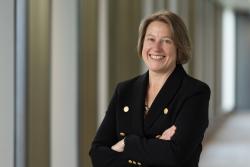
Previously, Anika was Executive Director (Social, Behavioural and Economic Sciences) at the Australian Research Council, overseeing major National Competitive Grants Program schemes and leading significant process reforms, including the two-stage Expression of Interest for Discovery Projects. She has also held senior research leadership roles at the University of Sydney, including Associate Dean (Research) in the Faculty of Arts and Social Sciences.
Event details
The Women in Sensing Forum will be held at UTS Startups Event Space on Tuesday 12 May 2006. 3 Broadway (corner of Broadway and Harris Street), Ultimo.
Attendees are invited to a complimentary lunch from 12:30 pm, followed by the panel discussion from 1:00 pm to 2:00 pm.