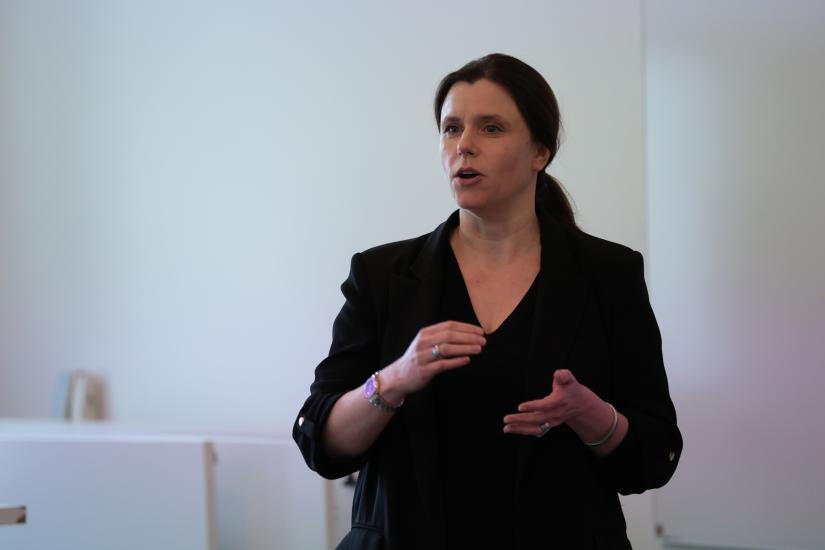
Director of the Centre for Climate Risk and Resilience, Professor Martina Linnenluecke recently shared an overview of the Centre and their research portfolio across the university.
Driving climate action through interdisciplinary research

The Centre is uniquely positioned to support businesses in taking urgent and immediate collaborative action to decarbonise the economy and regenerate Country and planetary health in response to climate change.
Contributing to the UTS Business School’s efforts to close the gap between knowledge and action, the Centre provides evidence-based research, education and advice to policymakers, business, and community leaders.
Martina brings extensive experience and high-calibre research in the dynamic fields of climate change, environmental finance and sustainability, leading around 60 researchers from across multiple faculties and disciplines.
“Even though we are located in the Business School, we have broader cross-institutional membership with colleagues across the university. We have a number of different focal areas including climate adaptation, resilience, decarbonisation, sustainable finance, climate analytics and disclosure,” Martina said.
“The work that we are doing is also directly feeding into many of the policy developments that are out there at the moment.”

Collaborating for a sustainable future
A significant part of the Centre's research portfolio is supported by the Australian Research Council, including projects examining best practice approaches to climate risk disclosure and the rapidly evolving climate reporting landscape. The team works closely with government, industry and standards bodies to ensure research directly informs policy and practice.
The Centre is also contributing to major collaborative initiatives across UTS. These include research exploring climate disclosure requirements, interdisciplinary projects on the health impacts of climate change, and a new white paper on microplastics risk developed in partnership with Change for Good at UTS.
“We are looking into microplastics risks and what companies can do here directly to phase out plastics as it has a direct connection to climate change.”
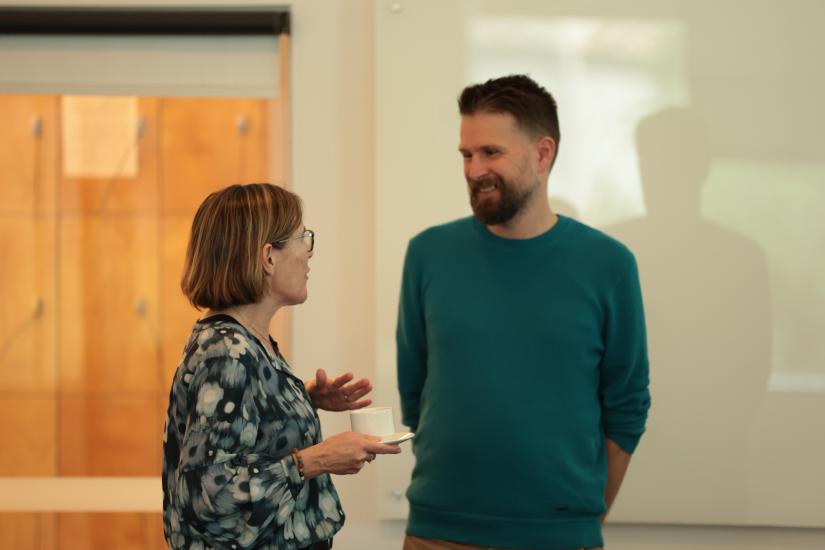
Martina spoke about the value of cross disciplinary collaboration and encouraged researchers from across the university to connect with the Centre.
“We are looking into microplastics risks and what companies can do here directly to phase out plastics as it has a direct connection to climate change.”
The team actively supports early career researchers through mentoring, research funding opportunities and collaborative grant development.
"We are very interested in interdisciplinary collaborations. If you have projects in this area, come and talk to us. “We look forward to working with you!” Martina said.
Researchers interested in climate risk, resilience and sustainability are encouraged to engage with the Centre through its seminars, research activities and collaborative projects.
What’s next?
- Discover the Centre for Climate Risk and Resilience
- Discover Change for Good at UTS
- Learn more about Martina’s research
- Receive the standing invitation to Research Café by emailing reshub@uts.edu.au