From Madrid to Riga to Seoul, Dr Rafael Luna Zelaya is bringing the work of the Infra Architecture Lab and UTS to a global stage, strengthening collaborations and advancing conversations about how architectural systems can actively produce and manage resources such as clean air, water, energy and biodiversity.
Reimagining architecture for a sustainable future

Caption
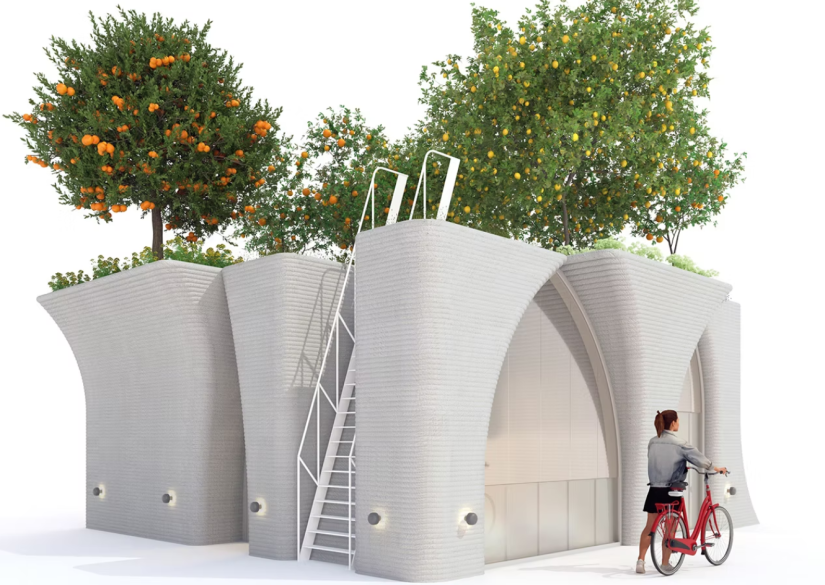
WILD FUTURES PAVILION: An Urban Pollinator Node
Rafael is a Senior Lecturer in Architecture in the Faculty of Design and Society. As Director of the Infra-Architecture Lab, his research explores how productive architecture can actively contribute to achieving the UN Sustainable Development Goals.
Productive architecture is based on the idea that buildings and urban systems don't have to be purely consumptive. Instead, architecture can actively produce environmental and social value.
Rafael and colleagues are interested in how spatial systems can integrate productive technologies to support circular economies. Through research and design, they develop hybrid architectural models that operate as active agents in ecological and urban resilience.
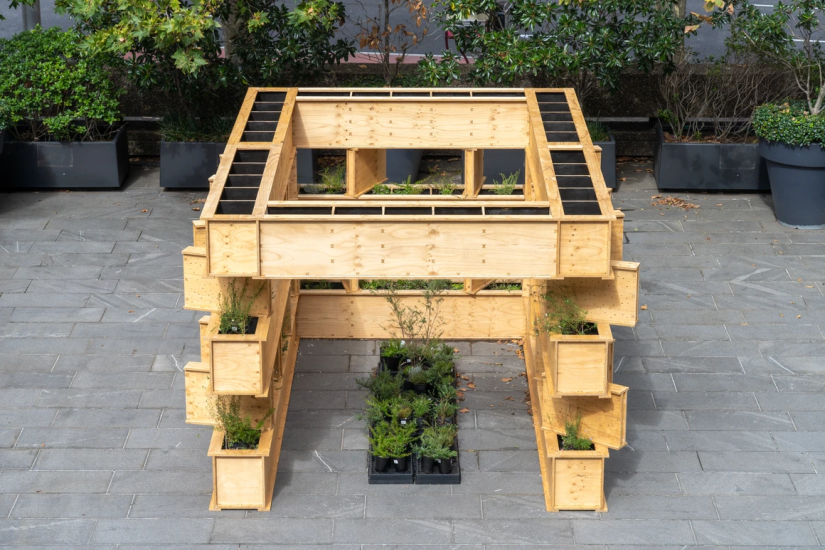

Rafael’s international engagements reflect the growing global interest in the Infra Architecture Lab’s research into productive urban systems and design.
“Over the course of a few months, I found myself moving between Madrid, Riga, and Seoul to participate in a series of engagements that felt like a genuine measure of how far the work coming out of the Infra-Architecture Lab has travelled,” he said.
Extending global relationships
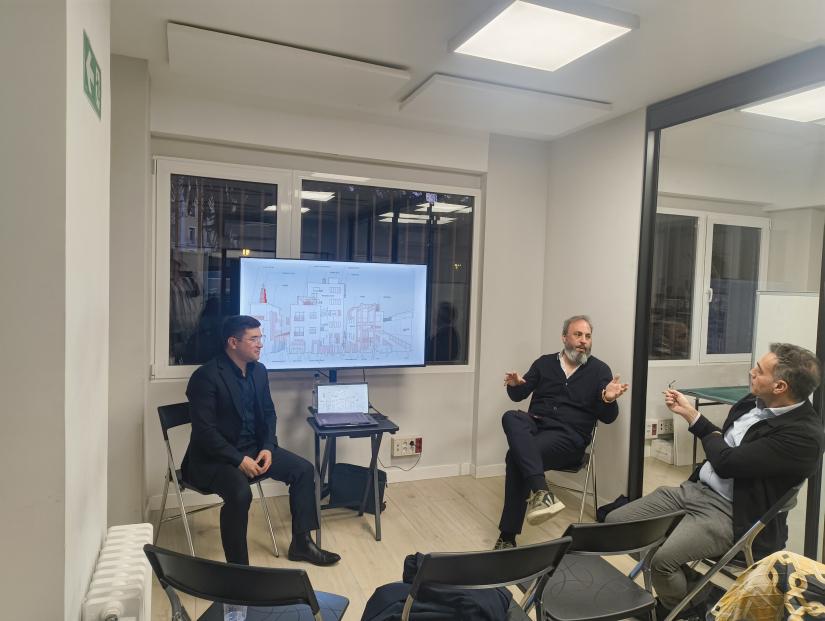
Rafael started in Madrid where he was invited to speak at an event organised through the Fundación Consejo España Australia that brought together people from industry, academia and diplomatic networks. Discussions focused on urban challenges and what future collaborations between Australia and Spain might look like.
“It was one of those rare occasions where presenting research doesn't feel like a one-way transmission. Conversations opened real possibilities for ongoing connection between UTS and partners in Spain.”
Rafael then flew to Riga through an Erasmus+ teaching mobility invitation from the Faculty of Architecture and Design at Riga Technical University where he delivered a series of lectures and workshops on productive architecture.
“With undergraduates, I focused on infrastructure, ecology and urban systems. With graduate students, our conversations went further into demographic change, adaptive reuse and what it means to design with environmental performance as a central ambition rather than an afterthought.”
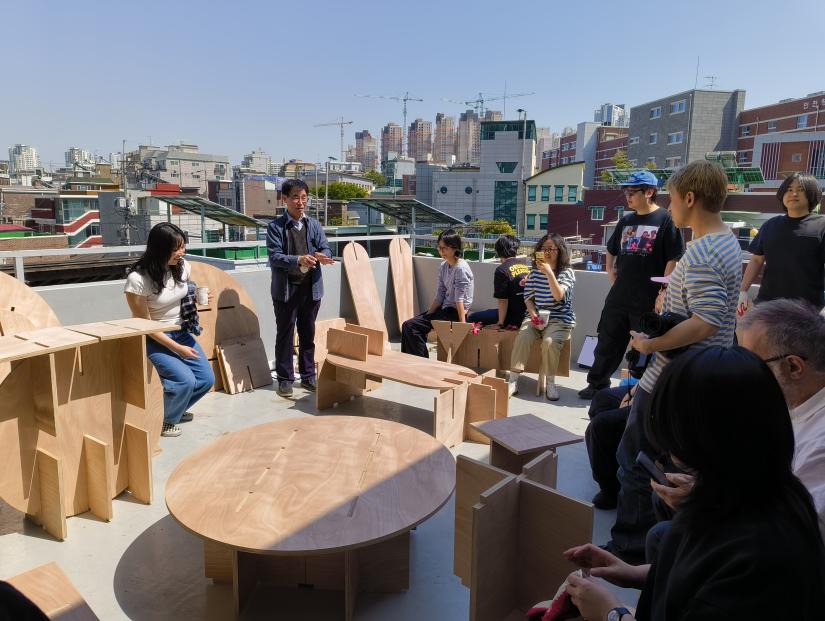
Beyond the classroom, Rafael undertook urban surveying and spatial analysis around the city to understand Latvian housing typologies and the particular conditions of Riga's evolving urban fabric.
“This kind of on-the-ground research is something I always find invaluable. I also had the chance to sit down with industry professionals and leaders in the region, connections that I hope will grow into longer-term collaborations.”
Rafael then travelled to Seoul to launch Seoul Phenomena at Seoul City Hall. This publication brings together academics, architects, designers and members of the public to talk about what's happening to cities, architecturally and culturally.
“The Infra-Architecture Lab has ongoing research connected to productive urban environments and this trip gave us a moment to put that work in front of a public audience,” he said. “There's something particularly energising about those cross-disciplinary moments like the ones we had in Seoul.”
During his travels across Europe and Asia, Rafael was also interviewed by the Azerbaijan State News Agency: AZERTAC in connection with the World Urban Forum 13 held in Baku, Azerbaijan.
The Forum is focused on the future of cities under conditions of climate change, rapid urbanisation and demographic transformation.
“Being part of that conversation, even remotely, represented a meaningful moment of visibility for the Lab's work and for UTS,” Rafael said.
Looking ahead, that momentum continues as the Infra-Architecture Lab has been invited to exhibit at Venice Design Week in September 2026.
None of these opportunities appeared out of nowhere. They grew out of conversations, exhibitions and collaborations developed over years through the Infra-Architecture Lab and through UTS.
“Venice Design Week is one of the most internationally visible platforms for design culture, and the opportunity to present our research into low-carbon fabrication, material systems, and productive architecture there feels like a significant step forward in terms of the Lab's global profile,” Rafael said.
“None of these opportunities appeared out of nowhere. They grew out of conversations, exhibitions and collaborations developed over years through the Infra-Architecture Lab and through UTS.”
“What I’ve gained from these international engagements is a clear sense of the relationships being built across academia, industry, government and cultural institutions, and across continents. That's what the Infra-Architecture Lab is ultimately about - architecture as a way of connecting things that don't always get to be in conversation with each other.”

Cultivating international research relationships
With his research sitting across multiple disciplines, including architecture, ecology, infrastructure, urbanism and technology, Rafael said that navigating different ways of thinking and communicating can be complex, particularly when working internationally across different institutional and cultural contexts.
“Another challenge is understanding how research ideas translate across different urban environments. Every city has its own political, climatic, economic and cultural realities, so research needs to remain adaptable and context-specific.”
Rafael said that the key to overcoming such challenges is to remain open and collaborative.
“Spending time walking and surveying cities and speaking with academics, students and industry professionals to understand local conditions is incredibly important,” he said, adding that teaching can also become part of the research process.
“Workshops and discussions with students often reveal perspectives and local knowledge that can reshape how a project or idea develops.”
One of the biggest lessons for Rafael in working internationally has been the importance of building relationships over time.
“Many opportunities emerge through ongoing conversations, workshops, exhibitions, and academic exchange rather than through isolated projects,” he said.
Mobility programs and teaching exchanges can become the foundation for much larger long-term partnerships. Be open to interdisciplinary and industry engagement as valuable conversations often happen outside formal academic settings.
“I’ve also learned the importance of grounding research in direct observation and lived urban experience. Being physically present in a city and understanding its rhythms, infrastructures and social dynamics can completely change how you approach a project.”
For others wishing to pursue international research collaborations, Rafael recommends you start with small projects.
“Mobility programs and teaching exchanges can become the foundation for much larger long-term partnerships. Be open to interdisciplinary and industry engagement as valuable conversations often happen outside formal academic settings.”


Chamber prototype to be exhibited in Venice
What’s next?
- Learn more about Rafael’s research.
- Discover the Infra-Architecture Lab.
- Read Rafael’s AZERTAC interview.
- Connect with the UTS International Grants team to discover international opportunities.
- Visit the Building an International Research Strategy landing page to learn how to build your international research strategy.