Verbal communication is fundamental to being human. It shapes how we connect with each other and the way we learn, work and participate in everyday life. But for those who stutter, verbal communication can be a challenge, affecting social confidence, relationships, education and employment.
Transforming lives through stuttering support

For 30 years, the Australian Stuttering Research Centre at UTS has been working to better understand stuttering and improve the lives of those affected by it. The Centre has built a global reputation for combining research and clinical practice to achieve impact.
“We have developed evidence-based treatments that are used by clinicians around the world, positioning the Centre as a leader in translating research into practical support for children, adults and families,” Foundation Director of the Australian Stuttering Research Centre, Professor Mark Onslow said.
One of the Centre’s most significant contributions is the Lidcombe Program treatment for children, which was developed through rigorous research and is now used internationally.
“It has changed the lives of thousands of children and their families,” Mark said.
Early intervention for stuttering
Before contacting the Centre, John sought treatment for his son Sunny who had developed a stutter. Over several months, he approached different speech therapists with varying degrees of success until he realised that Sunny’s speech wasn’t improving.
“With a limited time window to make an impact on our ability to treat his stuttering, I felt a strong urgency to work with speech therapists that really understood stuttering and how to work with children,” John said.
“Having someone that really understands how to work with a young child is really critical to having that child respond positively to the overall treatment journey.”
Today, with no detectable stutter, John said Sunny’s school teachers are always surprised to learn he ever had one.
With a limited time window to make an impact on our ability to treat his stuttering, I felt a strong urgency to work with speech therapists that really understood stuttering and how to work with children.
“It was an extremely difficult thing to deal with emotionally. As a parent, you worry about how your children will have a happy life when they grow up.”
John said successful stuttering treatment has dramatically improved Sunny’s quality of life and eased the burden he carried as a father. He urged other parents whose young children stutter to seek treatment as soon as possible.
“Early treatment is really important for it to be successful,” he said. “Don’t be afraid of the treatment. The Centre’s speech therapists consider the emotional journey of your child and they actually enjoy the treatment process and don’t feel labelled.”
Expanding treatment reach
As lead of the research and clinical activities at the Australian Stuttering Research Centre, Professor Robyn Lowe manages the development and evaluation of treatments for stuttering.
“Our goal is to develop effective early interventions that can be offered to children as soon as they begin to stutter,” she said.
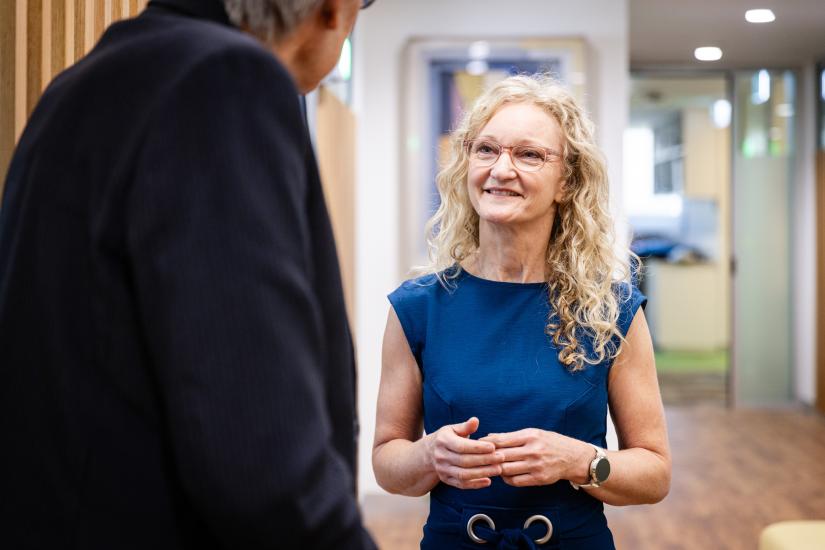

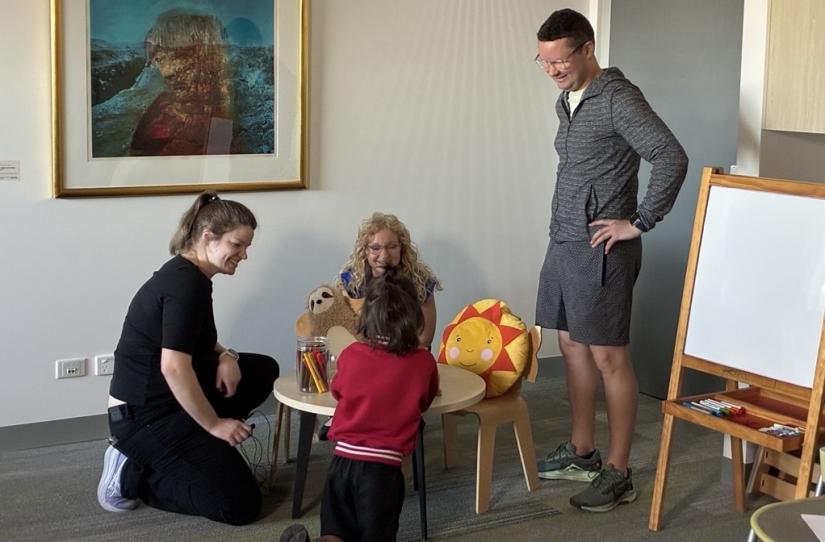
“For many people who stutter, anxiety is closely linked to their experiences of stuttering. We're developing treatments that deal with this anxiety to improve confidence and quality of life.”
The Centre is particularly focused on supporting families during the early stages of stuttering and equipping speech pathologists with additional strategies to help adults who experience anxiety alongside stuttering.
For many people who stutter, anxiety is closely linked to their experiences of stuttering. We're developing treatments that deal with this anxiety to improve confidence and quality of life.
“The strong outcomes and uptake of our online treatments have been incredibly encouraging. They've driven us to keep innovating, improving the treatment experience and making effective support accessible to people wherever they are in the world.”
Tackling social anxiety with iGlebe
Thirty years ago, stuttering was treated primarily as a speech disorder. According to clinical psychologist and psychological research program lead Prof Ross Menzies, the Centre helped establish the critical role mental health plays in stuttering and recovery.
"We were the group that discovered the broad range of mental health problems people who stutter can experience, and how those conditions can interfere with recovery."
Ross said that addressing anxiety and other mental health challenges not only improves wellbeing but also helps people apply speech rehabilitation techniques more effectively.
The Centre’s online treatment program, iGlebe, combines evidence-based approaches for stuttering and anxiety. The program assesses each user and creates an individualised treatment plan without the need to see a speech pathologist or clinical psychologist.
"The iGlebe program was the first fully automated, fully individualised treatment program in any area of health."
Originally designed for adults, the program has expanded to adolescents and is now used by people in more than 70 countries.
We were the group that discovered the broad range of mental health problems people who stutter can experience, and how those conditions can interfere with recovery.
“The iGlebe program provides high-quality care, with multiple trials showing it is just as effective as face-to-face treatment with a clinical psychologist. It delivers the same outcomes people would typically receive through costly services, but at no cost to the end user.”
The program supports multiple languages, helping overcome barriers to care around the world. The Centre is now exploring how artificial intelligence, machine learning and natural language processing can make treatment even more personalised and accessible.
"We envisage a future where AI powered avatars conduct assessments and interact with individuals in a far more dynamic way," Ross said.
"Our vision is to make free online treatments for stuttering accessible to people around the world, regardless of where they live or what language they speak," added Robyn.
With ongoing support from UTS, the team hopes to continue expanding access to treatment and addressing this global public health challenge.