Chancellor’s Research Fellow Dr Yan Liao started collaborating internationally during her postdoctoral research, when she worked closely with scientists from Ulm University in Germany and the UK Medical Research Council Laboratory of Molecular Biology (MRC-LMB). This year Yan took up a new role with the University of Nottingham as an Assistant Professor and an independent group leader
Forging an international career in microbiology

“Together, we produced several landmark publications, including a cover article in Nature Microbiology, a milestone that marked a turning point in my career,” Yan said.
Building on this foundation, a UTS Chancellor’s Research Fellowship provided Yan with a platform from which to expand these collaborations further.
“I established new research links with teams in the Netherlands and Austria, which led to additional high-impact papers in Nature Communications and PNAS.”
A Cambridge experience
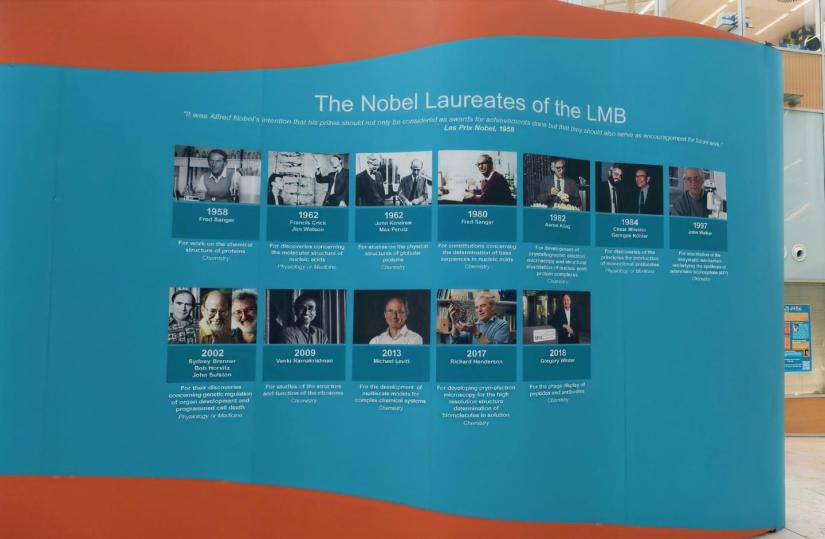
As part of her Chancellor's Research Fellowship, Yan was able to deepen this international engagement as a Visiting Fellow at MRC-LMB, Cambridge, one of the world’s leading institutes in structural and cell biology. Renowned for its groundbreaking discoveries, the MRC-LMB has been associated with 12 Nobel Prizes, including the landmark determination of the DNA double helix structure.
“This visit, supported by the UTS IRC scheme, enables me to continue pioneering work in archaeal cell biology while embedding myself in an environment that has shaped generations of scientific breakthroughs,” Yan said.
Yan’s research focuses on understanding archaeal cell shape and structural dynamics, an area where advanced imaging technologies are crucial.
This visit, supported by the UTS IRC scheme, enables me to continue pioneering work in archaeal cell biology while embedding myself in an environment that has shaped generations of scientific breakthroughs.
“At MRC-LMB, I had the opportunity to learn cryo-electron tomography (cryo-ET), a cutting-edge imaging technique that complements my expertise in fluorescence microscopy,” she said, adding that the exchange has been highly rewarding for both sides.
“While I gained hands-on experience with cryo-ET, I also brought my skills in fluorescence imaging to the MRC-LMB team, leading to the development of new collaborative projects that merge both imaging approaches.”
Establishing strong foundations
Yan said that the benefits of her exchange in Cambridge has extended far beyond technical skills.
“This experience has expanded my professional network, fostered interdisciplinary thinking, and laid the groundwork for long-term collaborations. Importantly, at this stage of my career, such international exposure helps me establish an independent research identity, distinct from my previous mentors, and positions me for future leadership in my field.”
Plan early for international engagements
The importance of international collaboration became clear to Yan early in her research career, when she became motivated me to reach beyond national borders and set the stage for the global partnerships that now define my research trajectory.
“During my PhD in Australia, I realised that the community studying archaea was relatively small. To access cutting-edge methods and complementary expertise, it was essential to connect with leading international groups,” Yan explained.
Yan believes that international collaboration broadens a researcher’s scientific horizon and enhances their visibility within the global community.
“By engaging with diverse perspectives, methods, and resources, one can address complex scientific questions that no single lab or nation could address alone,” she said.
During my PhD in Australia, I realised that the community studying archaea was relatively small. To access cutting-edge methods and complementary expertise, it was essential to connect with leading international groups.
For mid-career researchers, international collaboration is particularly crucial.
“It provides a pathway to move beyond the shadow of one’s mentors and to build an independent scientific identity. It also increases the impact of one’s research, helping to establish recognition and leadership in the field,” she said
International conferences as a gateway to collaboration
Yan recommends international conferences as an effective way to begin working towards international collaboration.
“Before attending a conference, be sure to identify researchers whose work aligns with your interests and engage with them actively by asking thoughtful questions during Q&A sessions and by follow up with them afterward,” she said, adding that speakers often remember those who ask questions for their presentation.
“Use the opportunity during breaks or networking sessions to discuss your ideas in more detail. Such interactions often serve as the first spark for meaningful collaboration,” she said.
“Keep in contact after the event through email, online meetings, or joint brainstorming. This approach can help transform a brief conference conversation into a lasting scientific partnership.”
Looking ahead, Yan expects her international collaborations to continue and become the cornerstone for building her profile as an independent Principal Investigator (PI).
“These partnerships will continue to strengthen my current research directions and lead to high-impact joint publications,” Yan said.
Keep in contact after the event through email, online meetings, or joint brainstorming. This approach can help transform a brief conference conversation into a lasting scientific partnership.
The trust and recognition Yan has earned within the international research community is already reflected in her recently being listed as a co-PI on a Wellcome Trust grant application in the UK.
Yan said she will use this appointment as an opportunity to expand a dynamic research network that bridges Australia, Europe, and beyond, advancing both her scientific goals and the broader understanding of archaeal biology.
Now working in the UK as an Assistant Professor in Microbiology at the University of Nottingham and an independent group leader, Yan is looking forward to advancing her career.
“It’s been a challenging transition, but it also comes with a lot of great opportunities. I’m really looking forward to this next stage of my career and seeing how things develop,” she said.
“I’m very grateful for the colleagues, friends, collaborators, and mentors I met during my time at UTS. In particular, I’d like to acknowledge the support I received through the Chancellor’s Research Fellowship and thank my mentor, A/Prof.Iain Duggin for his guidance and encouragement throughout that time.”
What’s next?