Since 2020, UTS has enjoyed a longstanding collaboration with the Honda Research Institute in Japan (HRI), spearheaded by Deborah Szapiro from the Bachelor of Animation Production. Earlier this year, Deborah arranged for her HRI collaborators to visit UTS.
Designing cooperative social robots

Deborah has been working with HRI for the past five years on a social robotics project entitled Haru that aims to create positive social impact in areas including education and health.
“We are working together to design co-operative social robots for positive social impact. HRI’s brief was to help them create a robot that bought joy, it was hard to resist” she said.
Deborah’s collaboration with HRI began when she met Dr Randy Gomez and started a conversation with him about the need to form interdisciplinary teams in order to design technology that has a positive social impact. She also discussed the role that animation and design expertise could play in the design of social robotics and creative content for social robots.
In April 2025 Deborah organised for an ideas exchange to be held over two days at UTS with the goal of laying the groundwork for further cross-disciplinary collaboration on the Haru project.
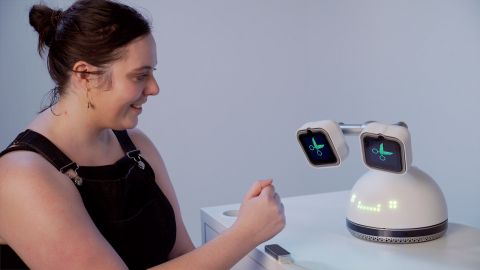
“It’s been very productive having the HRI team visit us at UTS to see what we are capable of in terms of sustainable and alternative materials for robotics, personalisation of robots, plus expand our thinking about ways to apply ethical design practices, animation and social and emotional learning principles to the development of creative content for social robots that interact with children,” said Deborah.
“HRI’s visit to UTS has strengthened the relationship between our two institutions and opened up new possibilities for creating meaningful advancements in the field of social robotics.”
Creating new opportunities
When working with international partners, Deborah said that it is important to create opportunities to bring research teams together. Szapiro is an ardent believer in interdisciplinary collaboration in the design of technology. During HRI’s two-day visit to UTS led by Dr. Bernhard Sendhoff, Global CEO and President of the EU office and Dr. Randy Gomez, Chief Scientist in Japan, the visiting research team was introduced to a wide range of UTS Academics from a range of disciplines.
HRI’s visit to UTS has strengthened the relationship between our two institutions and opened up new possibilities for creating meaningful advancements in the field of social robotics.
The visiting delegation participated in activities including a networking morning tea and workshops aimed at brainstorming and exploring new avenues for collaboration and innovation.
Morning sessions focused on discussions about personalisation, form and function for social robots designed to interacting with the general population. In the afternoon, participants delved into how to consider these aspects of robotic design in the context of creating robots for use in a children's hospital.
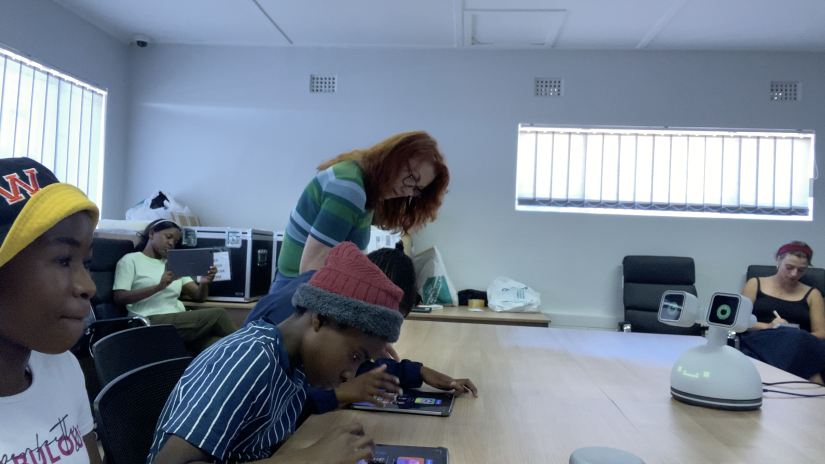
With an interdisciplinary mix of UTS academics and HDR students attending from the Faculties of Design, Architecture and Building (DAB), Arts and Social Sciences (FASS), Engineering and Information Technology (FEIT) and Health. Workshop topics were considered from a holistic social, ethical, technical, environmental and inclusive perspective.
The day concluded with a tour of the UTS Robotics Lab, where the HRI team had a chance to experience demonstrations of recent robotics research. On the second day, the HRI team visited the Advanced Fabrication Research Lab to consider alternative approaches to the materials used in a robotics.
Catalysing cross-disciplinary collaboration
Having been primed to think differently about form, function and materiality, Deborah said that the HRI researchers were particularly excited by the potential of UTS’s 3D knitting machine and the Advanced Fabrication Research Lab’s approach to sustainable materials.
“Visiting the UTS labs with their advanced fabrication facilities really inspired our HRI collaborators to think about what kinds of prototypes we could explore using materials that they had never considered previously,” she said, adding that the environmentally sustainable approaches and creative thinking demonstrated by UTS researchers impressed the HRI team.
Deborah was also able to introduce the HRI team to some of the innovative projects underway with UTS’s health and medical partners, sparking conversations about the possibility of expanding the current Haru in the Hospital project to Australia.
Looking ahead
In convening this visit from Honda Research Institute, Deborah said the value of this kind of knowledge exchange lies in its potential to drive further international collaboration to the benefit of society.
"Facilitating these kinds of international research visits are key to building trust and expanding opportunities for UTS academics to share our own research, and to learn from the brilliant researchers we work with in other countries,” she said.
“The interdisciplinary and creative nature of discussions and the workshops held with HRI during their visit to UTS has sparked new ideas and potential collaborations, and could have a positive impact on the future of social robotics.”
Facilitating these kinds of international research visits are key to building trust and expanding opportunities for UTS academics to share our own research, and to learn from the brilliant researchers we work with in other countries.
Deborah advises anyone working internationally to consider hosting a research visit to explore new opportunities, not only for your own team but to explore other areas of relevant expertise across the university.
Her top tips include:
- Plan early and involve others: Notify key stakeholders like your Dean, the International Office and relevant researchers well in advance. Confirm dates with key audiences and any required approvals. Communicate clearly with the visiting delegates to confirm timing, agenda, and any special requirements.
- Clarify objectives and mutual interests: Work with your research partners to define the and strategic objectives and purpose of the visit. Is it to explore research collaboration, partnership development, or knowledge exchange? Ensure alignment between your institution’s goals and those of the delegation.
- Prepare an itinerary: Build a schedule that includes meetings, tours, presentations and networking opportunities. Share bios and contact details of key participants widely to spark interest and facilitate meaningful engagement. If there are any engagement opportunities for the wider community, make sure you publicise these early through internal and external research channels.
- Ensure compliance and security: Review and follow institutional guidelines for hosting foreign nationals, including security approvals. Provide delegates with clear instructions on photography, data access, and facility use. Refer to official guides such as the ASIO International Delegations Guide for compliance.
- Showcase UTS’ capabilities and facilities: Organise technical tours and facility visits. Highlight any unique facilities and provide information about your institution and its research strengths.
- Provide a warm welcome and be mindful of cultural difference: Seek guidance from the UTS International Office about formal greetings, protocols and relevant cultural norms, dietary restrictions and accessibility needs. Use formal salutations as appropriate.
- Offer support: Offer to assist with tips on travel arrangements, accommodation, meals and local transport. Provide emergency contact details and ensure delegates have access to Wi-Fi and other essential services.
- Foster ongoing collaboration: After the visit, share online articles, photos and thankyou notes. Be sure to explore opportunities for future collaboration and maintain regular communication to build lasting partnerships.
What’s next?
Go to the Building an International Research Strategy landing page